Missing car loan payments creates financial stress, fear, and confusion. Many borrowers worry about handcuffs, courtrooms, and jail cells. U.S. law treats unpaid car loans very differently from criminal offenses. Knowing the facts prevents panic and helps borrowers make smart decisions before the situation spirals out of control.
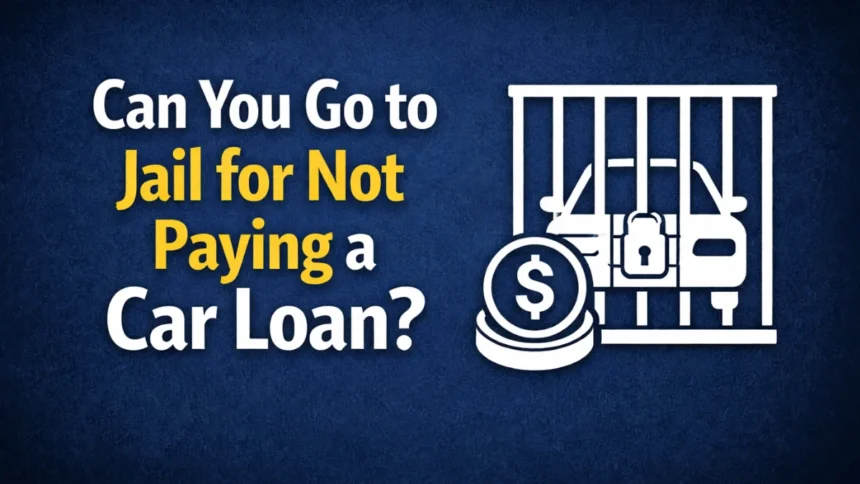
No, you cannot go to jail for not paying a car loan in the United States. Car loans are classified as civil debt, not criminal offenses. U.S. federal law and state constitutions prohibit imprisonment for unpaid consumer debt. According to the Consumer Financial Protection Bureau (CFPB), unpaid auto loans fall under civil contract disputes, not criminal law. That said, confusion exists because jail can happen indirectly, but only under very specific and avoidable circumstances.
Understanding Car Loans as Civil Debt in the United States
A car loan is a contractual agreement between a borrower and a lender. The lender provides funds, and the borrower agrees to repay the amount with interest over a fixed number of months, such as 36 months, 60 months, or 72 months.
Civil debt includes:
- Auto loans
- Credit cards
- Personal loans
- Medical bills
Criminal debt includes:
- Fines
- Penalties
- Restitution ordered by a court
Failure to pay a car loan means a breach of contract, not a crime.
Why You Cannot Go to Jail for Unpaid Car Loans?
The United States abolished debtors’ prisons in the early 1800s. Every U.S. state constitution prohibits incarceration solely for unpaid private debt.
The Federal Trade Commission (FTC) clearly states that lenders cannot threaten jail for unpaid consumer debt. Any lender or debt collector claiming jail time for unpaid auto loans violates federal law under the Fair Debt Collection Practices Act (FDCPA).
What Really Happens When You Stop Paying a Car Loan?
There are five predictable stages lenders follow after missed payments.
1. Missed Payments and Late Fees
After 30 days, the lender reports a late payment to credit bureaus. Its impact:
- Credit score drops 60 to 110 points
- Late fees range from $25 to $50 per missed payment
2. Default Status
After 90 to 120 days of non-payment, the loan enters default. Default triggers:
- Loan acceleration
- Collection calls
- Repossession planning
3. Car Repossession
Auto loans are secured debt, meaning the vehicle serves as collateral. In 48 states, lenders can repossess without court approval using “self-help repossession,” provided no breach of peace occurs. According to the Federal Reserve, nearly 1.7 million vehicles were repossessed in the U.S. in 2023.
4. Auction Sale and Deficiency Balance
After repossession, lenders sell the vehicle at auction. Example:
- Loan balance: $22,000
- Auction sale price: $15,000
- Remaining deficiency: $7,000
Borrowers remain legally responsible for the deficiency.
5. Lawsuit and Civil Judgment
If the borrower fails to pay the deficiency, the lender may file a civil lawsuit. Possible outcomes:
- Wage garnishment
- Bank account levy
- Property liens
Still, no jail time results from the judgment itself.
When Jail Can Happen (Rare and Indirect Scenarios)?
Jail occurs only when court orders are violated, not because of the unpaid loan.
Failure to Appear in Court
A borrower receives a court summons and ignores it. Result:
- Judge issues a bench warrant
- Arrest occurs for contempt of court, not debt
Ignoring Court-Ordered Payments
A judge orders installment payments after a lawsuit. Jail happens only if:
- The borrower has the ability to pay
- The borrower willfully refuses
Lying Under Oath or Fraud
Criminal charges apply if the borrower:
- Provided false income documents
- Used stolen identity
- Hid assets during court proceedings
These cases involve fraud, not unpaid loans.
Learn More: Green-Collar Crime: Definition, Examples & Laws
State-by-State Differences That Matter
Some states restrict collection actions more than others.
States With Strong Consumer Protections
- Texas
- Florida
- North Carolina
- Pennsylvania
Texas prohibits wage garnishment for consumer debt.
States Allowing Wage Garnishment
- California
- New York
- Illinois
Typical garnishment limits:
- 25% of disposable income
- Or the amount exceeding 30× federal minimum wage
Still, no state allows jail for unpaid car loans alone.
Can Debt Collectors Threaten Jail?
No. Threatening jail violates federal law. Illegal collector actions include:
- Claiming arrest is imminent
- Impersonating law enforcement
- Using court language without lawsuits
Violations allow borrowers to sue collectors for up to $1,000 per incident, plus damages.
How Unpaid Car Loans Affect Credit and Financial Life?
An unpaid car loan damages financial health for 7 years. Credit report consequences:
- Default notation
- Repossession mark
- Collection accounts
- Civil judgments
Loan approval impact:
- Mortgage denial rates increase 41%
- Auto loan interest rates rise by 6–12 percentage points
Smart Steps to Avoid Lawsuits and Repossession
Contact the Lender Early
Lenders prefer negotiation over repossession. Options include:
- Payment deferrals
- Loan modifications
- Temporary hardship programs
Voluntary Surrender
Returning the car reduces repossession fees.
Savings:
- $500 to $2,000 in added costs
Negotiate the Deficiency
Many lenders accept 40% to 60% lump-sum settlements.
Seek Legal or Credit Counseling
Nonprofit agencies approved by the U.S. Department of Justice offer free guidance.
Bankruptcy and Car Loans
Bankruptcy stops collection actions immediately through an automatic stay.
Chapter 7
- Discharges deficiency balances
- Allows surrender of vehicle
Chapter 13
- Restructures payments
- Prevents repossession
Bankruptcy does not result in jail under any circumstance.
Common Myths About Car Loan Jail Time
- Missing payments leads to arrest
- Repossession equals criminal charges
- Civil judgments trigger jail
- Debt collectors can send police
Each claim is legally false.
Final Takeaway
Unpaid car loans cause financial damage, not criminal punishment. Jail is not a legal penalty for failing to pay a car loan in the United States. Fear often comes from misinformation, aggressive collectors, or misunderstanding court notices.
The real risks include:
- Repossession
- Credit score damage
- Civil lawsuits
- Wage garnishment
Understanding the law empowers borrowers to respond early, negotiate smarter, and protect their future. Panic helps no one. Knowledge changes outcomes.
FAQs
Can unpaid car loans lead to criminal charges?
Criminal charges apply only if fraud or court violations occur, not nonpayment.
Can a judge jail me for owing money?
A judge can jail only for contempt of court, not unpaid debt.
Does repossession mean jail is next?
Repossession is a civil remedy with no criminal connection.
Can lenders file criminal complaints?
Lenders file civil lawsuits, not criminal cases.