Civil vs. Criminal Liability: What’s the Difference?
Civil and criminal liability often get mixed up, but they affect people’s lives in completely different ways. Civil liability usually means paying damages to someone you harmed, while criminal liability…


Miranda Doctrine: Miranda Rights and Warnings in the U.S. Legal System
According to the U.S. Department of Justice (DOJ), the Miranda Doctrine emerged after the Supreme Court’s 1966 decision in Miranda v. Arizona, 384 U.S. 436. This ruling held that the…
Is Involuntary Manslaughter a Felony? Legal Classification & Penalties
According to the Federal Bureau of Investigation’s Uniform Crime Reporting (UCR) Program, manslaughter by negligence — also called involuntary manslaughter — accounted for roughly 7% of all homicides in the…
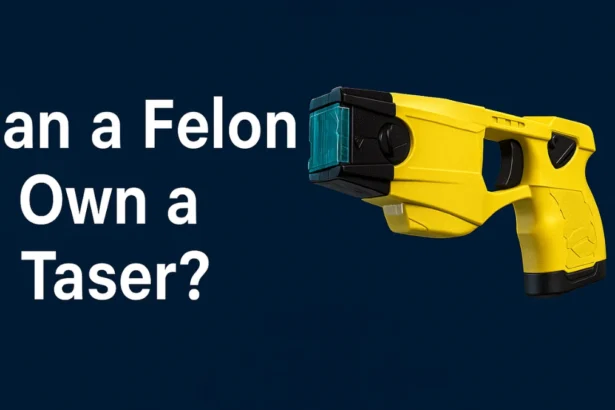
Can a Felon Own a Taser?
When we talk about self-defense, especially in today’s uncertain world, more and more folks are turning to non-lethal tools like Tasers and stun guns. They're marketed as safer alternatives to…
Can You Sue for Being Falsely Accused?
A false accusation occurs when a person is wrongly blamed for something they did not do, especially a crime or a serious misconduct. According to the Legal Information Institute (LII)…
Blue-Collar Crime: Definition, Examples, Causes, Laws & Prevention
Blue-collar crime in the United States refers to non-violent, financially or physically damaging offenses typically committed by individuals working in manual labor, trade, or service-based occupations. These crimes impact employers,…
Non-Violent Felon Gun Rights 2026
According to the Bureau of Justice Statistics, approximately 6.1 million U.S. adults have a felony conviction. In states like Georgia alone, that number touches 730,000. While violent felonies (e.g., murder,…
Does Safeway Hire Felons In 2026?
According to the U.S. Equal Employment Opportunity Commission (EEOC), employers must provide equal hiring opportunities and avoid blanket bans on hiring individuals with a criminal record. This means companies like…
What Is Grand Theft? Charges, Penalties & Legal Consequences
According to the Federal Bureau of Investigation (FBI), U.S. law enforcement recorded 5,931,400 larceny-theft offenses in 2023, and thousands of these cases qualified as grand theft, depending on the state’s…
Common Types of Healthcare Fraud: Definitions & Prevention Strategies
According to the National Health Care Anti-Fraud Association (NHCAA), healthcare fraud costs the United States an estimated $68 billion every year, representing roughly 3% of all healthcare spending. A separate…
Convicted vs Charged – Legal Definitions, Differences & Implications
According to the Bureau of Justice Statistics, nearly 70 million Americans have some type of criminal record, many of which stem from arrests that did not lead to convictions. This…
What Are the Different Classes of Felonies?
An estimated 6.1 million adults in the United States have a felony conviction on their record. That’s nearly 1 in every 40 Americans. And no — not all felonies are…
What Are Hate Crimes ? Definition & Laws
Hate crimes in the United States are criminal acts motivated by bias against a person’s race, religion, sexual orientation, ethnicity, gender identity, disability, or national origin. These crimes harm individuals…
CDL Jobs for Felons: Top Trucking Companies Hiring in 2026
Finding a solid job with a felony conviction can feel like an uphill battle. But here’s the good news—many trucking companies are offering second chances. If you’re ready to turn…
Can a Convicted Felon Get a Security Clearance?
According to the United States Department of Defense (DoD) and the Office of Personnel Management (OPM), having a felony conviction does not automatically disqualify someone from obtaining a security clearance.…
Is Public Intoxication a Crime? Laws, Penalties, & State-by-State Rules
The United States has no single federal rule on public intoxication. Instead, 50 states, the District of Columbia, and thousands of cities apply their own legal standards. Some states treat…