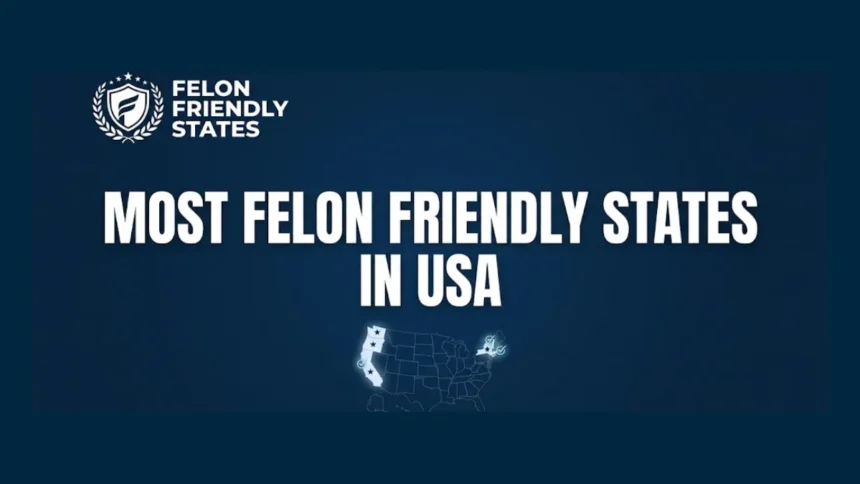
According to the Bureau of Justice Statistics, criminal records can affect employment, housing, education, and community reintegration across the United States. In 2026, several U.S. states have expanded fair-chance employment laws, record-clearing programs, occupational licensing reforms, and voting rights restoration policies. These changes have created better opportunities for individuals with felony convictions to secure jobs, find housing, start businesses, and reintegrate into society.
Ranking Factors Used
A state is considered more felon friendly when it has stronger support in these 7 areas:
- Ban-the-box or fair-chance hiring laws
- Expungement, sealing, or clean-slate record relief
- Voting rights restoration
- Occupational licensing fairness
- Reentry programs
- Housing access
- Job market and employer flexibility
Most Felon Friendly States in 2026
| Rank | State | Felon-Friendly Level | Why It Ranks Here |
|---|---|---|---|
| 1 | California | Very High | California has strong fair-chance hiring laws, broad expungement options, major reentry programs, voting rights restoration after prison, and stronger worker protections than most states. Large cities such as Los Angeles, San Diego, and Sacramento have many employers open to second-chance hiring. |
| 2 | New York | Very High | New York has strong anti-discrimination protections for people with criminal records, certificate relief options, reentry programs, voting rights restoration after release from prison, and large job markets in New York City, Buffalo, Rochester, and Albany. |
| 3 | Illinois | Very High | Illinois has fair-chance employment protections, record-sealing options, occupational licensing reforms, and major reentry support in Chicago and nearby cities. It is one of the stronger Midwest states for people rebuilding after a felony. |
| 4 | New Jersey | Very High | New Jersey has strong ban-the-box rules, expungement laws, voting rights restoration after incarceration, and clean-slate-style reforms. Its public transportation and dense job market make reentry easier than in many states. |
| 5 | Colorado | High | Colorado has fair-chance hiring protections, record-sealing opportunities, occupational licensing reforms, and a growing job market. Denver and Colorado Springs offer more reentry resources than rural areas. |
| 6 | Minnesota | High | Minnesota has ban-the-box protections, supportive workforce programs, voting rights improvements, and a relatively strong social-service system. Minneapolis and St. Paul provide more second-chance employment options. |
| 7 | Washington | High | Washington offers strong reentry support, fair employment policies, and voting rights restoration after prison release. Seattle, Tacoma, and Spokane have nonprofit and state-backed programs that help returning citizens. |
| 8 | Oregon | High | Oregon has fair-chance hiring practices, reentry programs, voting rights restoration after release, and a more rehabilitation-focused approach than many states. Portland has the strongest support network in the state. |
| 9 | Massachusetts | High | Massachusetts has ban-the-box protections, record-sealing options, voting rights restoration after prison, and strong workforce support. Boston and Worcester provide more opportunities than smaller towns. |
| 10 | Connecticut | High | Connecticut has clean-slate reforms, voting rights restoration after release, and strong employment protections. Its smaller size helps people access state programs more easily. |
| 11 | Pennsylvania | High | Pennsylvania has clean-slate record-sealing laws, reentry programs, and strong job markets in Philadelphia, Pittsburgh, and Harrisburg. Housing can still be challenging, but legal reforms make the state more supportive than average. |
| 12 | Michigan | High | Michigan has automatic expungement reforms, occupational licensing changes, and strong second-chance hiring support. Detroit, Grand Rapids, and Lansing offer better reentry services than rural areas. |
| 13 | Maryland | Moderate-High | Maryland has fair-chance hiring policies, expungement options, and reentry support near Baltimore and the D.C. metro area. Job access is better in urban counties. |
| 14 | Virginia | Moderate-High | Virginia has expanded rights restoration efforts and improving record-sealing rules. Northern Virginia offers strong job access, though some licensing and housing barriers remain. |
| 15 | Rhode Island | Moderate-High | Rhode Island has record-sealing options, voting rights restoration after release, and accessible state-level reentry services. Its small size can make services easier to navigate. |
| 16 | Hawaii | Moderate-High | Hawaii has long-standing fair-chance hiring protections and voting rights restoration after incarceration. High housing costs, though, make reentry harder. |
| 17 | Nevada | Moderate-High | Nevada has record-sealing options, voting rights restoration after release, and growing job markets in Las Vegas and Reno. Hospitality and service industries may offer second-chance employment. |
| 18 | Arizona | Moderate | Arizona has improved expungement and set-aside options, but barriers remain in housing and licensing. Phoenix and Tucson offer better reentry resources than rural counties. |
| 19 | Georgia | Moderate | Georgia has expanded record restriction options and a growing job market in Atlanta, Savannah, and Augusta. Voting rights and occupational licensing barriers can still affect people with felony records. |
| 20 | North Carolina | Moderate | North Carolina has expungement options and reentry support, especially in Charlotte, Raleigh, and Greensboro. Some felony records still create major barriers for housing and licensing. |
| 21 | Texas | Moderate | Texas has a huge job market and many employers, but state-level protections are weaker than in top-ranked states. Expunction and nondisclosure laws help some people, though many felony records remain difficult to clear. |
| 22 | Florida | Moderate | Florida has many jobs and large cities, but voting rights, housing, and licensing barriers can be tough. Orlando, Tampa, Miami, and Jacksonville have more reentry services than rural counties. |
| 23 | Ohio | Moderate | Ohio has sealing options, certificate programs, and workforce initiatives. Cleveland, Columbus, Cincinnati, and Dayton offer reentry support, but housing remains a common challenge. |
| 24 | Wisconsin | Moderate | Wisconsin has some employment and reentry support, especially in Milwaukee and Madison. Record-clearing laws are more limited than in higher-ranked states. |
| 25 | Delaware | Moderate | Delaware has expungement and second-chance reforms, but its smaller job market limits options. Wilmington has the strongest reentry support. |
| 26 | Vermont | Moderate | Vermont has voting rights access and a rehabilitation-focused culture, but fewer large employers and limited housing stock reduce its ranking. |
| 27 | Maine | Moderate | Maine has voting rights access and smaller reentry systems, but jobs and housing can be limited outside Portland, Lewiston, and Bangor. |
| 28 | New Mexico | Moderate | New Mexico has some record relief and reentry support, but unemployment, housing, and rural access issues can create obstacles. Albuquerque offers the strongest opportunities. |
| 29 | Tennessee | Moderate-Low | Tennessee has some expungement options and job growth in Nashville, Memphis, and Knoxville, but voting rights restoration and licensing rules can be difficult. |
| 30 | Missouri | Moderate-Low | Missouri has expungement options and affordable living, but fewer statewide protections. St. Louis and Kansas City provide better second-chance resources. |
| 31 | Indiana | Moderate-Low | Indiana has expungement laws and a solid manufacturing job base, but protections against record-based discrimination are limited. Indianapolis offers the best reentry support. |
| 32 | Kentucky | Moderate-Low | Kentucky has expungement options for some offenses and lower living costs, but employment, licensing, and voting rights barriers can remain serious. |
| 33 | Louisiana | Moderate-Low | Louisiana has reentry programs and job opportunities in Baton Rouge, New Orleans, and Lafayette, but high incarceration impacts and housing barriers lower its ranking. |
| 34 | Alabama | Low-Moderate | Alabama has limited protections for people with felony records. Some expungement options exist, but voting, licensing, and housing barriers remain tough. |
| 35 | South Carolina | Low-Moderate | South Carolina offers some reentry support and job growth, but weaker statewide protections and limited expungement options make reentry harder. |
| 36 | Oklahoma | Low-Moderate | Oklahoma has some record-clearing reforms, but felony records can still create serious employment, housing, and licensing problems. |
| 37 | Kansas | Low-Moderate | Kansas has expungement options and affordable housing in many areas, but employment protections and reentry services are not as strong as in higher-ranked states. |
| 38 | Nebraska | Low-Moderate | Nebraska has some pardons and set-aside options, but limited clean-slate relief and fewer urban job markets reduce its ranking. |
| 39 | Iowa | Low-Moderate | Iowa has restored some voting rights through executive action, but record relief and employment protections remain limited compared with top states. |
| 40 | Arkansas | Low | Arkansas has affordable living and some record-sealing options, but fewer worker protections and limited reentry services create challenges. |
| 41 | Mississippi | Low | Mississippi has limited expungement options, fewer reentry programs, and weaker employment protections. Job access can be harder outside larger cities. |
| 42 | West Virginia | Low | West Virginia has some expungement options, but limited job markets, transportation barriers, and fewer reentry programs make reintegration difficult. |
| 43 | Idaho | Low | Idaho has limited record-clearing options and fewer protections for people with felony records. Boise offers better opportunities than rural areas. |
| 44 | Montana | Low | Montana has lower population density and fewer large employers. Record relief exists in some cases, but reentry services can be limited. |
| 45 | South Dakota | Low | South Dakota has limited statewide protections and fewer large job markets. Housing and transportation can be difficult for returning citizens. |
| 46 | North Dakota | Low | North Dakota has a smaller job market and limited reentry infrastructure. Some industries may hire felons, but state protections are not especially strong. |
| 47 | Wyoming | Low | Wyoming has limited reentry services, fewer large employers, and fewer legal protections for people with felony convictions. |
| 48 | Utah | Low | Utah has some expungement reforms, but felony record barriers can remain strict. Housing and licensing rules may create problems for many applicants. |
| 49 | New Hampshire | Low | New Hampshire has limited record-clearing access and fewer large reentry programs. Its small job market can make second-chance employment harder. |
| 50 | Alaska | Low | Alaska ranks last because of remote geography, limited reentry infrastructure, high living costs in many areas, and fewer job markets. Some local opportunities exist, but relocation and support access can be difficult. |
Top 10 Most Felon Friendly States in 2026
The 10 most felon friendly states in USA 2026 are:
- California
- New York
- Illinois
- New Jersey
- Colorado
- Minnesota
- Washington
- Oregon
- Massachusetts
- Connecticut
These states rank highest because they combine fair-chance hiring, record-clearing options, voting rights restoration, occupational licensing reform, and strong reentry programs.
Why California Is the Most Felon Friendly State?
California ranks number 1 because it has some of the strongest protections for people with criminal records. The state limits how employers can use conviction history, offers several record-relief options, and has large city job markets. Los Angeles, San Francisco, San Diego, Sacramento, and Oakland have many nonprofits, workforce agencies, and housing programs that help returning citizens.
Hardest States for Felons in 2026
The least felon-friendly states in this ranking are:
- Alaska
- New Hampshire
- Utah
- Wyoming
- North Dakota
- South Dakota
- Montana
- Idaho
- West Virginia
- Mississippi
These states tend to have fewer reentry services, smaller job markets, tougher housing access, or weaker legal protections.
Best States for Employment
Best States for Housing
States With More Rental Restrictions
- Florida
- Texas
- Alabama
- Mississippi
Best States for Expungement
- Michigan
- New Jersey
- Pennsylvania
- California
- Illinois
Best States for Starting a Business
- Texas
- Florida
- Nevada
- Tennessee
- Arizona
Best States for Specific Felonies
Best States for Drug Felonies
- California
- Colorado
- Oregon
- Washington
Best States for Non-Violent Felonies
- Illinois
- Michigan
- New Jersey
- Pennsylvania
Best States for White-Collar Felonies
- Texas
- Florida
- Georgia
- Arizona
Best States for DUI Felonies
- Colorado
- Minnesota
- Michigan
- Washington
Best Cities for Felons
| City | State | Why |
|---|---|---|
| Chicago | Illinois | Large job market |
| Atlanta | Georgia | Strong logistics sector |
| Houston | Texas | High hiring volume |
| Phoenix | Arizona | Growing economy |
| Denver | Colorado | Reentry programs |
| Detroit | Michigan | Expungement reforms |
| Minneapolis | Minnesota | Fair chance hiring |
Final Thought
The most felon friendly states in USA 2026 are states that give people a real second chance through jobs, housing, voting rights, record clearing, and fair licensing rules. California, New York, Illinois, New Jersey, and Colorado lead the list because they offer stronger legal protections and larger reentry networks.
For anyone with a felony record, the best state depends on the person’s exact conviction, sentence completion date, career goals, housing needs, and family support. Always check the latest official state law before moving or applying for expungement.
FAQs
What is the most felon-friendly state in 2026?
California ranks among the most felon-friendly states due to fair-chance hiring laws, expungement opportunities, and strong reentry programs.
Can a felon move to another state?
Yes. Most felons can relocate after completing incarceration and complying with probation or parole requirements.
Which states automatically restore voting rights?
States such as California, Colorado, New York, Oregon, and Washington restore voting rights after incarceration.
Can a felon get a professional license?
Yes. Many states allow felons to obtain licenses in trades and professions after meeting eligibility requirements.
What industries hire the most felons?
Construction, manufacturing, warehousing, trucking, landscaping, and food service frequently hire workers with felony records.
Can a felon become a truck driver?
Yes. Many employers hire CDL drivers with felony convictions, depending on the offense and company policy.
What is a Clean Slate law?
A Clean Slate law automatically seals or clears eligible criminal records after a specific period.
Which states have Clean Slate laws?
Pennsylvania, Michigan, Connecticut, New Jersey, Delaware, and Utah have adopted Clean Slate-style reforms.
Which states have the strongest reentry programs?
California, New York, Illinois, Colorado, and Washington have extensive reentry and workforce development programs.
Are non-violent felonies treated differently than violent felonies?
Yes. Non-violent felonies often qualify for more expungement, employment, and licensing opportunities.
What is the biggest challenge for felons after release?
Finding stable employment and housing remains the most common challenge nationwide.
Which states are considered least felon-friendly?
Alaska, Wyoming, North Dakota, South Dakota, and Mississippi generally offer fewer reentry resources and legal protections.
What should a felon consider before moving to another state?
Research employment opportunities, housing costs, expungement laws, licensing rules, voting rights, and local reentry programs before relocating.